Episode 6: When the Church Stopped Dancing -Morris Dancing, Puritan Festivity Wars, and the Governance of Pleasure (1540–1660)
Episode 6 of Music and the Moral Panic follows Morris dancing and Sunday recreation as they became contested territory in Reformation and early Stuart England. Parish institutions had incorporated Morris dancing into communal life, while Protestant and Puritan reformers increasingly challenged church ales, May games, alehouses, dancing, and other festivities through campaigns for Sabbath observance and moral discipline. James I’s 1618 Declaration of Sports and Charles I’s 1633 reissue made the conflict explicit by placing royal authority behind selected recreation after worship. What emerged was a struggle over jurisdiction: competing institutions sought the power to decide when ordinary people could gather, what they could do together, and which forms of collective pleasure counted as lawful.
Savonarola and Martin Luther had already demonstrated something unsettling about organized culture: songs could gather people, move them, and turn participation into political force. Episode 5 followed that struggle through music. In England, the same problem soon appeared somewhere more physical. The question moved from what people sang together to where they gathered, how they spent their communal time, and who possessed the authority to decide what counted as legitimate pleasure.
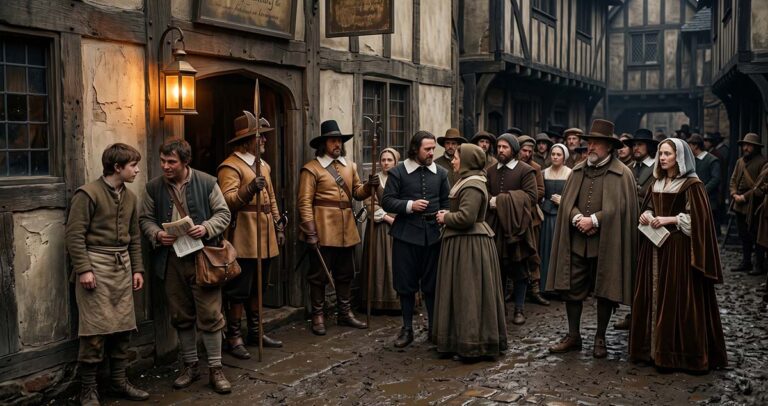
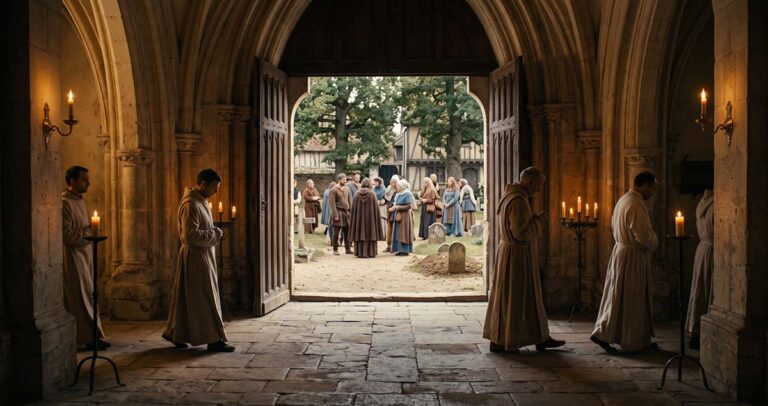
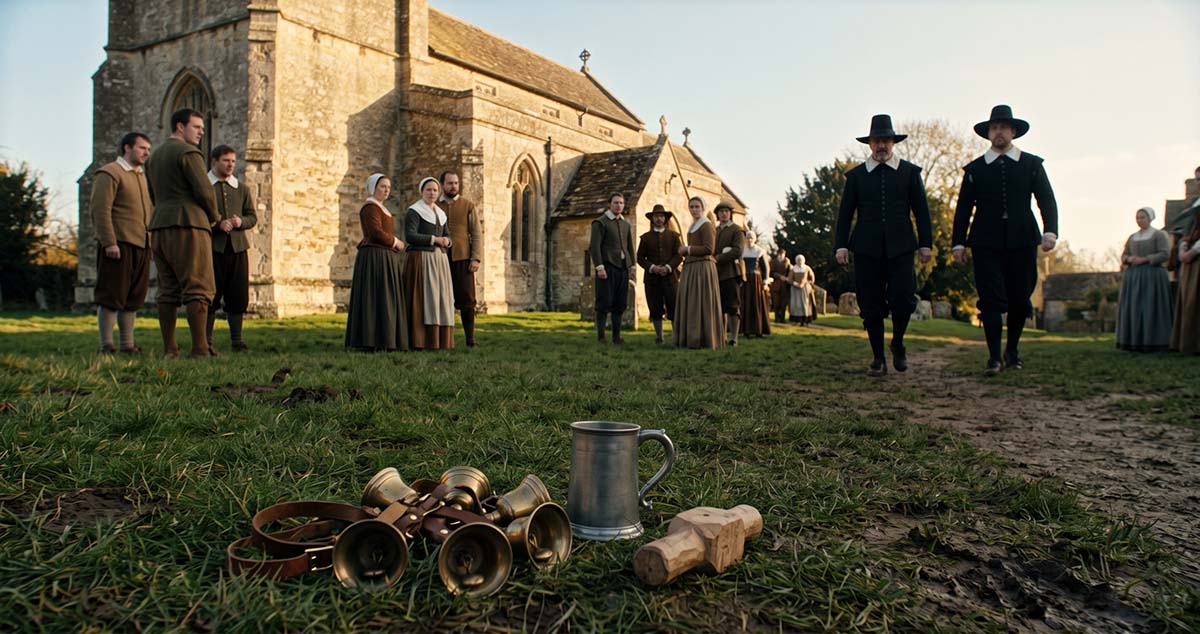
An early sixteenth-century English churchyard brings the conflict into view. Brass bells sound from dancers’ legs. Neighbors gather around ale and seasonal festivities. The church isn’t watching this world from a distance. Parish institutions are materially involved in producing it.
The Churchyard on Payroll
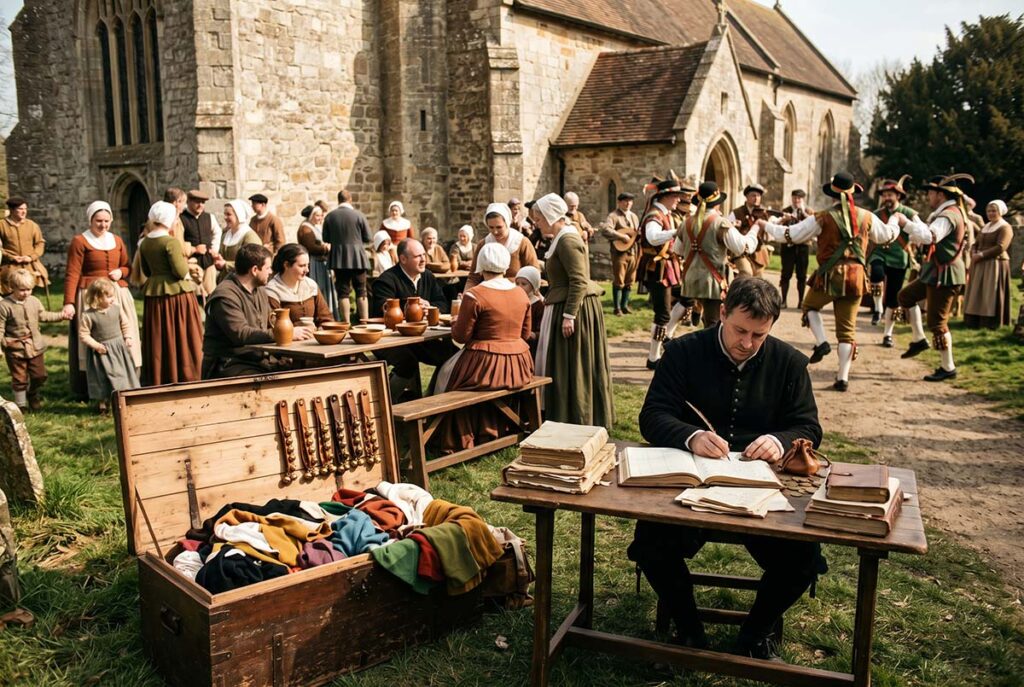
Surviving records from Kingston upon Thames make the relationship between parish life and Morris dancing unusually tangible. Churchwardens purchased materials associated with Morris performance, including clothing and bells. These weren’t simply possessions carried into the churchyard by entertainers who happened to perform nearby. They belonged to the material economy of the parish.
The Church was the Morris dancers’ employer.
Church ales and related festivities could raise money for parish needs while drawing neighbors into a common social world. Religion, finance, recreation, and local association hadn’t yet separated into the categories a modern observer might expect. Consecrated space could accommodate worship, burial, ale, fundraising, music, and dancing because all of them participated in the life of the parish.
The crowd was useful. Its presence generated revenue, reinforced local relationships, and helped sustain the institution around which much of community life was organized. Parish authorities consequently had practical reasons to accommodate collective pleasure.
That starting point complicates any story in which religious authority simply discovered that dancing was sinful and turned against it. Festivity had already existed inside institutional life. The Reformation-era conflict concerned something harder: what forms of communal behavior legitimate religion should authorize, under whose supervision, and according to whose rules.
The Ideological Friction
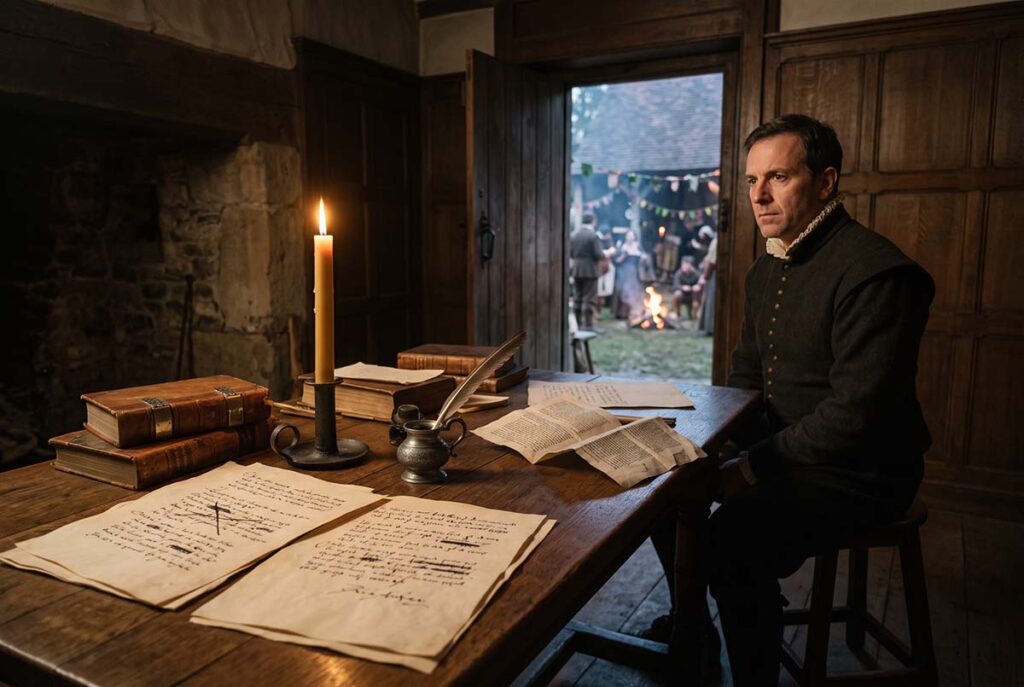
The Protestant Reformation didn’t empty England’s churchyards in a single sweep. Traditional festivities persisted unevenly according to locality, clergy, magistrates, political conditions, and changing religious priorities. Morris dancing survived. So did May games, ales, and other customary practices. Reform arrived as an extended contest inside communities whose older habits were difficult to separate from the social life surrounding them.
Philip Stubbes gave that contest one of its most vivid printed voices in 1583. His Anatomie of Abuses attacked May games, dancing, drinking, fashion, and popular festivities as symptoms of moral disorder. The maypole could become an object of theological condemnation, while the gatherings surrounding it could be treated as environments in which sexual restraint, household authority, and godly discipline deteriorated.
Alehouses brought the problem indoors. They were places where neighbors drank and played games, but they also exchanged news, maintained relationships, negotiated small transactions, and participated in ordinary social life. Their significance came partly from their informality. People didn’t need a pulpit, court, or parish office to build relationships there.
That doesn’t prove that Stubbes or other reformers secretly possessed a modern theory of social networks. The documented concerns were drunkenness, Sabbath-breaking, religious conformity, disorder, and moral discipline. Yet the regulatory pressure repeatedly fell on spaces where collective life took shape outside tightly supervised worship.
The pattern matters because the dispute gradually expanded beyond the moral quality of individual pleasures. Authorities were also confronting the spaces and relationships those pleasures sustained. Dancing, drinking, seasonal festivities, and games created occasions for people to gather without reducing the gathering to an institutional purpose.
The churchyard had once made that gathering useful to the parish. Reform increasingly made its legitimacy conditional.
The War on Sunday Afternoon
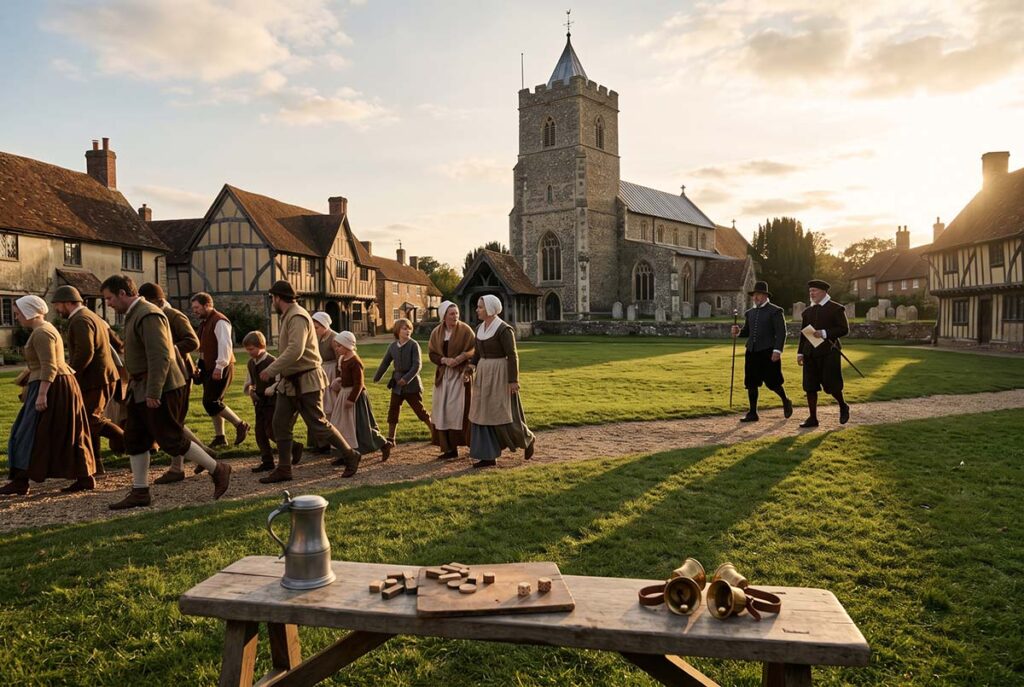
Sabbatarianism carried the conflict into the calendar. Reformers seeking stricter observance of Sunday challenged customs in which divine worship could be followed by recreation. Games, drinking, dancing, and seasonal festivities therefore became part of a larger argument about what obedience required once the congregation left the service.
For working people, Sunday afternoon carried a practical significance that theological arguments could obscure. Agricultural and manual labor consumed much of the week. Restricting recreation after worship narrowed one of the principal periods in which ordinary people could gather for purposes other than labor or formal devotion.
The class effect shouldn’t be exaggerated into a uniform national experience. English religious practice and enforcement differed substantially from place to place. What can be seen more securely is the growing effort to regulate Sunday conduct and the repeated collision between stricter religious discipline and older recreational customs.
Sunday afternoon was becoming a jurisdiction.
That shift gave apparently modest disputes over games, drinking, dancing, and maypoles a larger political meaning. Once authorities claimed the right to determine what could happen after worship, the question extended beyond whether recreation was proper. Someone had to possess the power to define proper recreation for everyone else.
The old calendar had rested partly on custom. The new dispute demanded authorization.
The Crown Enters the Dance
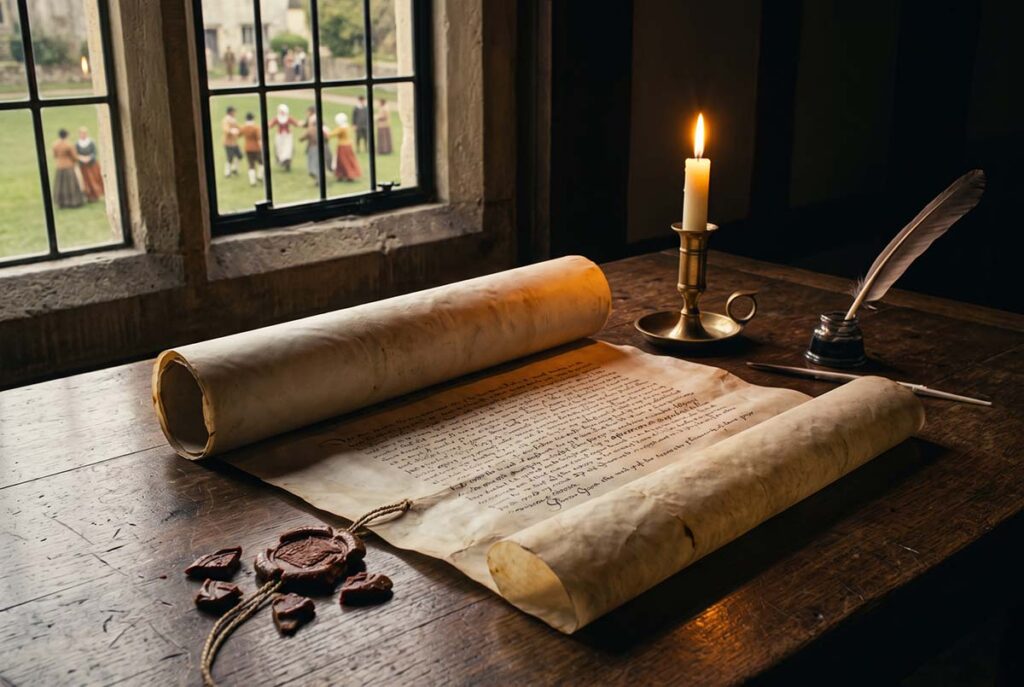
James I issued the Declaration of Sports in 1618 as royal authority intervened against attempts to suppress lawful Sunday recreation. Charles I substantially reissued the policy in 1633. Commonly remembered as the Book of Sports, the declaration protected specified traditional recreations, including dancing, after divine service.
Its conditions are crucial. The monarchy wasn’t offering a modern doctrine of unrestricted leisure. Worship came first, and recreation remained legitimate only within boundaries the Crown itself recognized. Royal authority defended pleasure while simultaneously asserting the power to authorize it.
The Crown was governing pleasure too.
That makes the controversy richer than a struggle between freedom and repression. Puritan reformers sought to discipline Sunday according to one conception of religious obedience. Royal authority defended selected customary practices according to another conception of legitimate order. Both sides assumed that public behavior could be governed. They fought over whose governance would prevail.
Ordinary conduct consequently acquired political meaning. Permitting traditional Sunday recreation could demonstrate obedience to royal policy. Restricting it could align a locality with the godly campaign for stricter discipline. A dance that had existed for generations now carried implications far beyond the steps themselves.
The Book of Sports weaponized a tradition already caught inside a political conflict.
Royal intervention didn’t create the dispute, but it made the institutional structure impossible to ignore. Dancing had entered the machinery of government. The churchyard and village green had become places where allegiance could be made visible through what ordinary people were permitted to do with their own afternoon.
The Hangman and the Decree
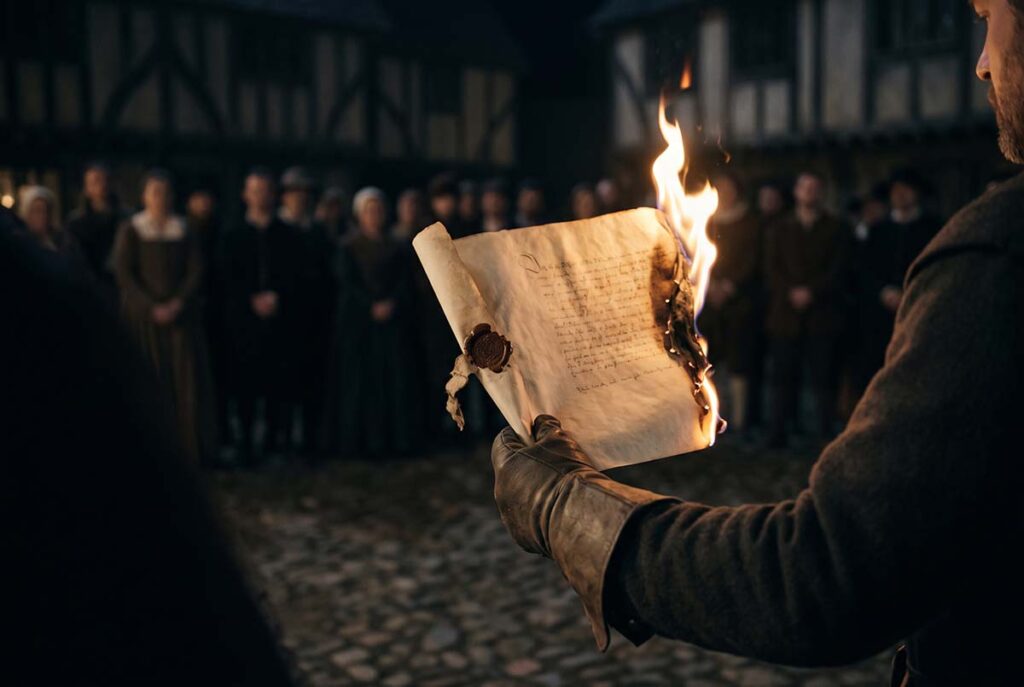
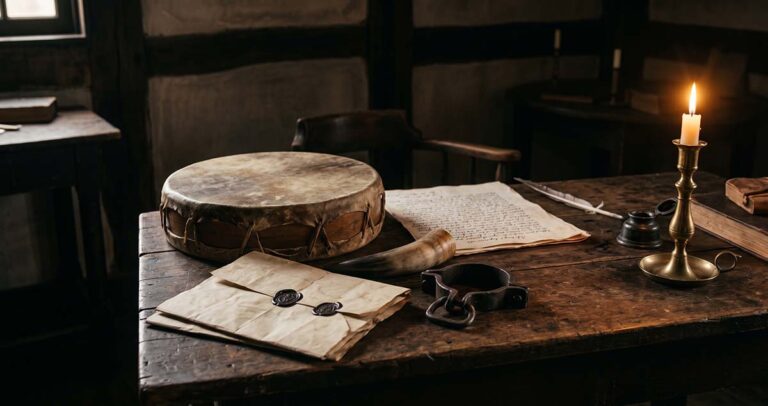
By 1643, England had descended into civil war, and the Book of Sports had become inseparable from the political and religious order that had defended it. Parliament ordered copies destroyed. The task of burning the royal recreation policy fell to the common hangman.
The surviving order leaves a remarkable final image. A document governing games, dancing, and Sunday recreation had acquired enough political weight to be publicly destroyed through an official associated with punishment. The policy that had once attempted to define lawful leisure had itself become intolerable under a changing balance of authority.
England hadn’t passed neatly from a Church that loved dancing to a Church that banned it. Institutions weren’t uniform, enforcement varied, political conditions changed, and Morris dancing survived. The evidence also doesn’t establish that every reformer consciously understood the campaign as an effort to destroy autonomous social networks.
What the struggle produced is clearer. Churchyards, alehouses, village greens, and Sunday afternoons increasingly became spaces and periods whose legitimacy depended on authorization. Custom could no longer settle the question. Competing authorities claimed the right to determine which gatherings were acceptable, which pleasures could coexist with religious obedience, and which uses of communal time would be treated as disorder.
The episode begins with brass bells purchased within parish life and ends with a royal recreation decree handed to the hangman. Between those images lies more than the history of a folk dance. Collective pleasure had become a jurisdictional problem.
The institution’s relationship to the gathering changed when the gathering’s relationship to authority changed. A crowd that once served parish life could later appear unruly when its social world resisted the boundaries reformers sought to impose. The Crown responded by authorizing pleasure on its own terms, and Parliament eventually answered by destroying the Crown’s authorization.
The institution doesn’t fear the dance. It fears the crowd the dance assembles, and when it can’t own that crowd, it learns to criminalize it.
Episode 7 carries the argument into another crowded space. London’s theaters will bring strangers together across social boundaries, circulate ideas beyond the pulpit, and temporarily rearrange ordinary rules of class and public behavior. The dangerous crowd moves from the churchyard to the stage.
Frequently Asked Questions
Why did Puritans oppose Morris dancing and Sunday recreation?
Reformers associated May games, alehouses, Sunday sports, drinking, and popular festivity with Sabbath-breaking and failures of moral discipline. Those activities also gathered people in communal spaces beyond tightly supervised worship. Regulation of recreation consequently became part of a larger struggle over legitimate public conduct and who possessed authority over it.
What was Philip Stubbes’s The Anatomie of Abuses?
Philip Stubbes published The Anatomie of Abuses in 1583 as a sweeping Protestant attack on contemporary recreations and social customs. He condemned dancing, May festivities, drinking, fashion, and other pleasures as symptoms of moral disorder. His work provides one of the clearest printed expressions of the reforming critique examined in this episode.
What was Sabbatarianism in early modern England?
Sabbatarianism called for stricter observance of Sunday as a religious day governed by the Fourth Commandment. Older customs permitted recreation after worship, so restrictions on games, drinking, dancing, and festivities turned Sunday afternoon into contested territory between reforming discipline and customary communal life.
What was the Book of Sports?
The Book of Sports is the name commonly given to the royal policy first issued nationally by James I in 1618 and substantially reissued by Charles I in 1633. It permitted specified Sunday recreations after divine service, including dancing and traditional festivities, placing royal authority directly against stricter Puritan regulation of leisure.
Did the Church simply change from supporting Morris dancing to banning it?
No. Parish institutions had materially supported Morris dancing, while later Protestant and Puritan reform developed unevenly across England. Morris dancing survived throughout the period. The growing conflict concerned whether traditional festivity remained legitimate and which authorities possessed the power to regulate it.
What did the Book of Sports controversy actually establish?
It established ordinary recreation as a jurisdictional question. Puritan reformers sought stricter discipline over Sunday conduct, while the Crown defended selected traditional pleasures under conditions of its own. Both sides assumed that collective behavior could be governed and fought over whose definition of lawful recreation would prevail.
Why does the fight over Morris dancing matter beyond folk history?
The episode shows how regulating pleasure can become a means of regulating association. Churchyards, alehouses, village greens, and Sunday afternoons allowed ordinary people to form community outside formal institutional settings. Once competing authorities claimed the power to authorize those gatherings, disputes over dancing and games became conflicts over collective life itself.
Why were theaters and public crowds the next target after Sunday festivity?
The next episode moves the same problem into London’s theaters, where large mixed crowds could gather, exchange ideas, blur social boundaries, and temporarily rearrange established hierarchies. Theater closures and sumptuary regulation extend the question raised here: what happens when authorities begin treating the crowd itself as dangerous?